


the secrets of cooking with Cheddar
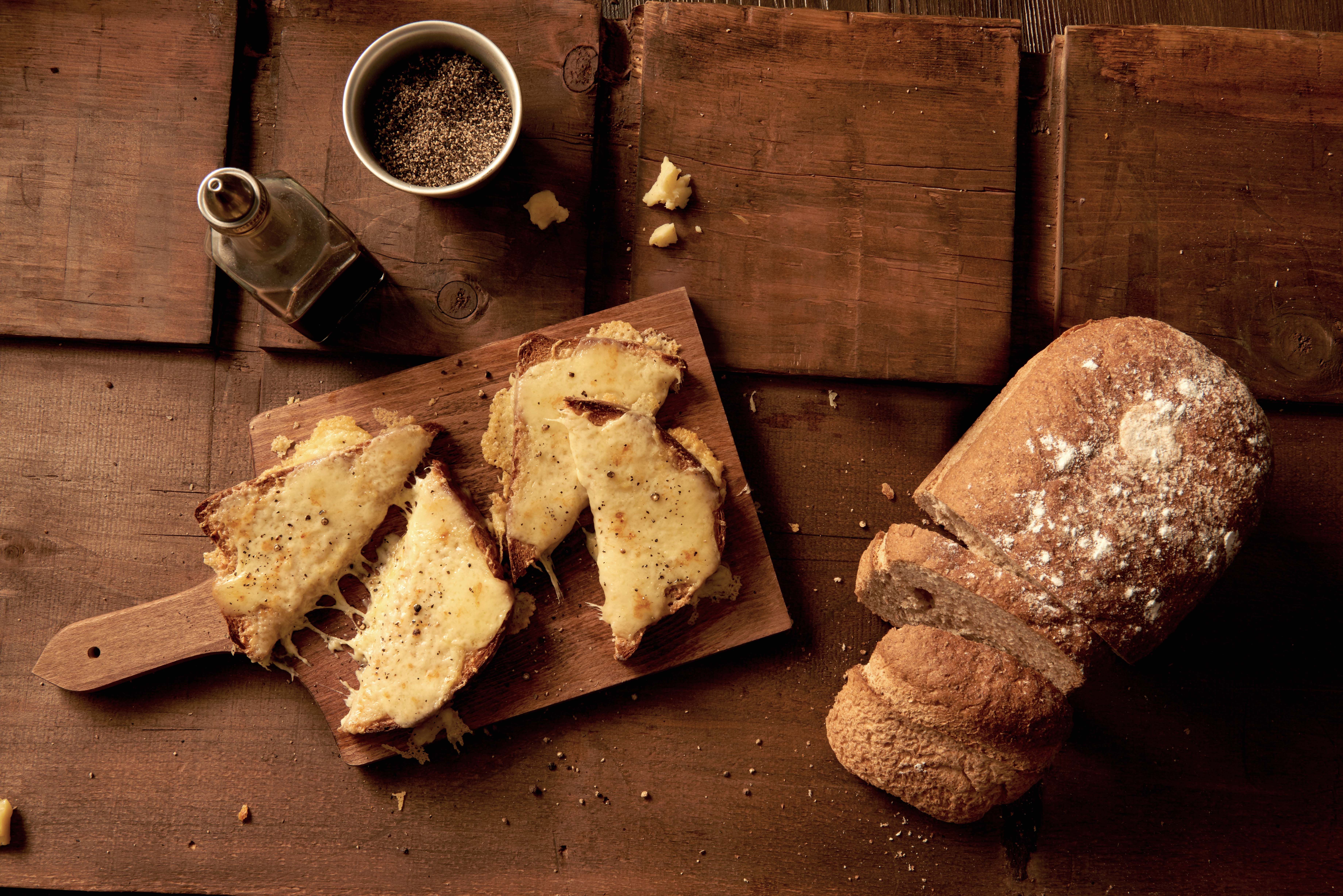
On the cheeseboard or in a sandwich, most of us have a favourite Wyke Cheddar, from Mild to Vintage. But when we’re applying heat, the rules change: a toastie may not work with Vintage, a quiche might need a little more kick than the Mild, and a Mature might not have quite enough complexity for your star salad.
So where to turn? We talked to Anna Shepherd, who creates the brilliant recipes for our website. A versatile and inventive cook, recipe developer and cookbook author (her latest is Love Vegetables, celebrating all things plant-based), she dug into the ways to make the most of your Cheddar in the kitchen.
For most recipes, says Anna, she’d plump for the Mature, aged for six months and with the rich flavour upfront. “I would probably use the Mature as an ingredient with other vegetables, say, or if I was making a tart,” she says, and if I wanted a bit of extra flavour I’d go for the Extra Mature. Because I cook mainly vegetarian dishes, and I want those stronger flavours in order to make everything really dance.”
Matured up to 12 months, our Extra has a fuller flavour but Anna explains that going further brings the danger of overpowering other ingredients in a recipe: “If you were using other strong flavours like olives or capers or anchovies or other salty things, you’re better off using a less aged cheddar, either a Mature or an Extra Mature, rather than a Vintage, in order to let everything come together more harmoniously.”
Cheddar that’s aged shorter also melts better, which means it cooks better. “The older it is the more concentrated the texture,” says Anna, “a lot of the moisture is evaporated over time, and as soon as it starts to cool down the cheese will solidify a bit more.”
That goes for our Mild Cheddar, too. “I cook with that a lot and it works really well,” she says. “With a lot of recipes, ingredients that are rich in fats are really great carriers of flavour. So the Mild would be great in something like a Spanish omelette, where you’re looking for more richness, the same sort of thing that a lovely olive oil would bring.” Mild is, naturally, also good for adding something lighter, when there are lots of other things going on: “So if you were making something like the Cheesy Spring Onion Flapjacks I’ve done for Wyke, Mild would work really well instead of Mature Cheddar there. Or if it was a tart with grated carrot and sundried tomatoes in it, Mild would make it light and easy to eat and still add a little bit of saltiness.”
So what about Vintage? “The Vintage has got such complexity that I think it’s really great to enjoy on its own,” says Anna. It can almost be wasted in a way if there are lots of other strong flavours in the mix – you don’t get the sense of its quality.” There are exceptions, though: “I’d put a slice of Vintage in a bacon sandwich or BLT, to add a bit of contrast, where the hot bacon and cold cheese make the flavours even more pronounced. And if you’re really heroing Cheddar in the recipe – say, for a really great cheese on toast on some lovely bread, or a simple tart with a very mild-flavoured vegetable such as leeks or spinach – then I think the Vintage is a great option.”
But really, she says, the Vintage comes into its own as a finishing ingredient. “It’s got a really special depth that makes it perfect as a final flourish. I grate it over in the way I would a really good Parmesan as a finish for salads or tarts or roasted vegetables. It’s something I’ve seen in restaurants recently, chefs championing really well-crafted Cheddar as an ingredient in its own right, so grating it over chard or cabbage wedges, things like that. We often treat Cheddar like an everyday cheese but it can be a really elevated ingredient.”
Find Anna’s recipes for Wyke in our Recipes section on the top menu. For everything else she gets up to, visit annashepherdfood.com

.jpg)


