


The Power of Nature
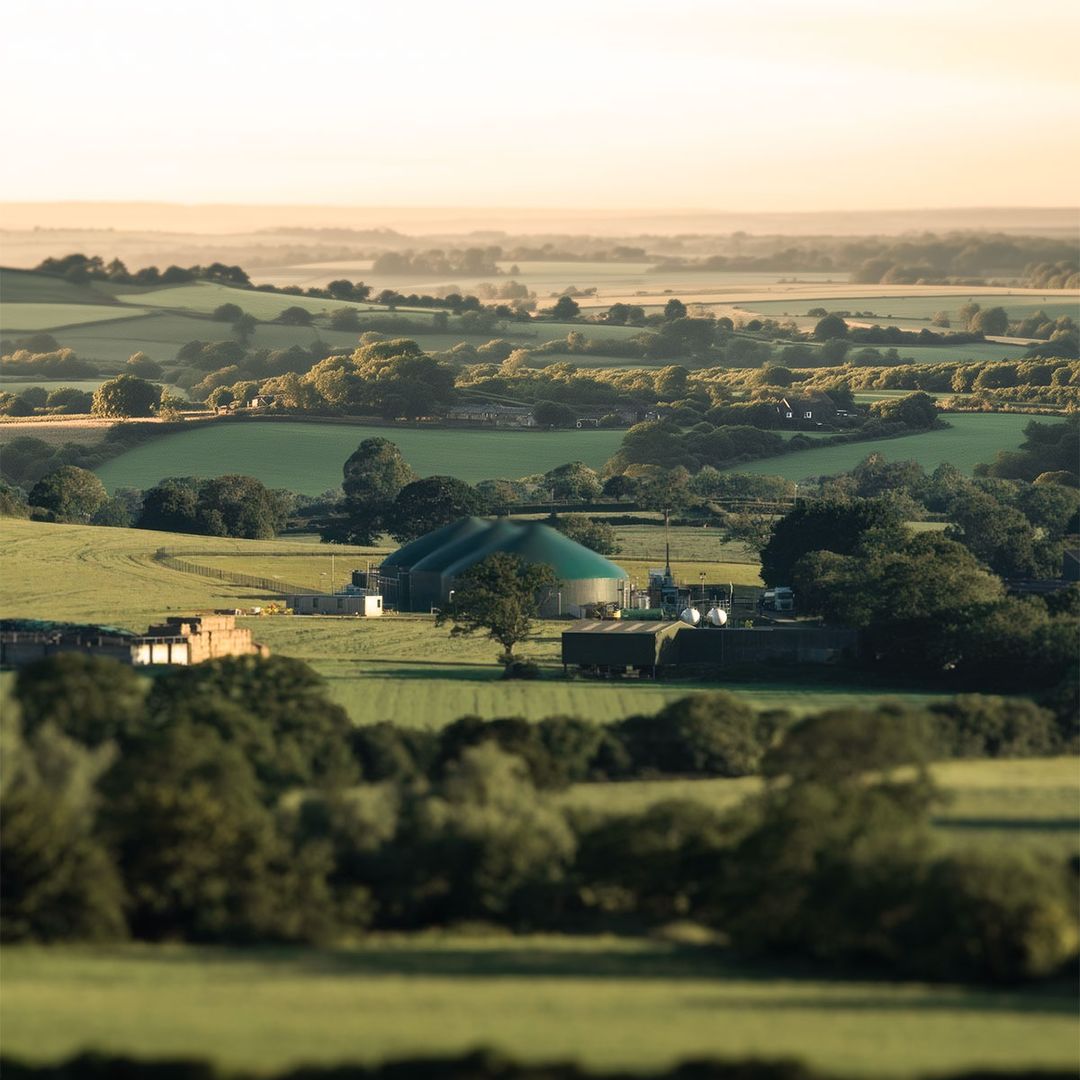
At Wyke, we’re proud to be pioneers of sustainable farming. Inspired by the example set by previous generations of our family, we’ve invested in the latest technology to ensure that we give back to nature at least as much as it gives to us. That means not only that we work hard on regeneration and replanting for the flora and fauna around us, but that we make use of the incredible advances in solar power, water recycling and particularly renewable energy production.
At the heart of our renewable energy project is our Anaerobic Digestion (AD) plant, introduced in 2013, which converts organic waste into biogas, using otherwise unwanted materials from our own work on the farm and in the dairy, as well as from other farmers and food producers. The AD does the magic bit of turning rubbish into power, but just as important in the process is the Combined Heat & Power System, or CHP.
After our five Anaerobic Digesters have converted the feedstock into gas, we send it through the CHP units, which transform it again. They give us electricity that runs the whole of the dairy, our Visitor Centre, offices and our electric milk tanker, and also generate “waste” heat that is used in the dairy too. Beyond this, there is enough surplus gas generated to produce electricity and biomethane to heat 6,000 local homes and businesses through the local grid and gas network.
Since we began using this system, both our capacity and our demand has increased. So this year, under the management of James Barwick, Renewable Energy Technical Manager, and Engineering Director Jason Fewell, we installed a further CHP unit in our Bruton site. This means we can now generate a further 800kW on top of the existing 1-megawatt capacity of the existing two units, almost doubling our capacity.
“Our site here in Bruton is our biggest electric consuming site, and to be able to run two engines to take away any grid input is really important,” says James. “With the rising price of electricity in the last few years, being able to control our energy in-house is better from a cost perspective, but it’s also very important to us that we’re producing all our cheese and butter with renewable energy.”
Sustainability isn’t just an after-thought at Wyke: it’s right at the centre of all our plans, including infrastructure and tech. As Jason puts it, “A lot of companies would build a factory first and then say ‘How do we make it greener?’, whereas we’re making it greener before we’ve built it. We’re ahead of the curve rather than following it.”
That means that the new CHP unit is also future-proofed, ready to be integrated into a planned expansion of our dairy. “A new dairy will have a lot of heat requirement,” explains Jason, “and we’ll be able to use hot water from the CHP for that. Instead of just generating steam, we can generate power and use the heat as well. This has been designed in with the new engine for the new dairy so that we’re ready.”
The new CHP unit comes after we installed 104kW of solar arrays in 2023, and installed energy-efficient panel insulation in our cheese stores, which lower our energy consumption and emissions. Meanwhile, using technology to increase sustainability goes hand in hand with more natural methods. “We’re doing a lot at the moment on improving biodiversity,” he says, “with a big push in the last couple of years on wild flower margins and extra tree planting.”
As pioneers of sustainable farming, it has become second nature at Wyke to use every opportunity to ensure not only that we’re using the most planet-friendly technology but also that we’re doing all we can to preserve the natural balance of the countryside around us. “Yes, we’re always trying to put something back,” says James. “Like with the construction of our AD plant, we planted a huge amount of trees and hedgerows around the back. Now, when you go there, the trees are pretty tall and well-established. It’s nice to see that we’ve put something back into the environment for the future.”
.jpg)


